When The City Page Stops Being The City Page
 Chris Collins - Whisper One
Posted On February 16, 2026
Chris Collins - Whisper One
Posted On February 16, 2026
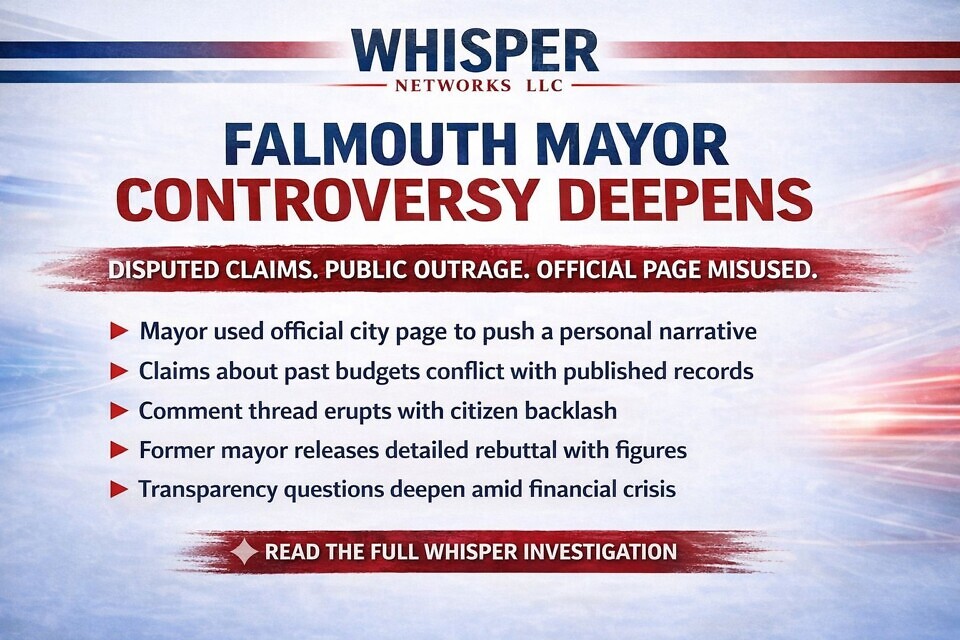
A Breakdown Of What Really Happened This Week In Falmouth
There are moments in small town government when a line gets crossed so clearly that it demands attention. What unfolded this week was not a policy dispute. It was not a simple disagreement over budgets or history. It was something much more fundamental.
The official City of Falmouth page was used to defend one elected official, promote her narrative, and shift blame onto a former mayor while debating residents in the comment section. A government page is not a personal microphone. It is not a campaign tool. It is not a shield for political arguments.
It belongs to the people.
Not the person sitting in the chair.
Yet that line was ignored.
━━━━━━━━━━━━━━━━━━
The Post That Should Have Never Appeared On A Government Page
Mayor Sabrina Hazen published a long defense piece on the official city page that spoke less to the public and more to a particular political storyline. Rather than a neutral informational release, it was framed as a correction to a former mayor, complete with selective history and personal recollections.
It carried her voice.
Her defense.
Her political frustration.
Her interpretation of old events.
Then she went a step further and engaged commenters directly.
Public debate is fine.
Doing it through the city page is not fine at all.
Government resources cannot be used to defend your political record.
Government pages cannot be used to reframe past administrations.
Government channels cannot be used to promote yourself or criticize someone running for office.
Yet that is exactly what happened.
━━━━━━━━━━━━━━━━━━
The Public Saw It For What It Was
Sometimes leadership errors are subtle.
This was not one of those times.
Residents spelled out the problem clearly.
A business owner asked the obvious question.
“Who exactly runs this page because I would think a city page would not promote one candidate over another.”
That single line is the heart of the matter.
When the public notices the professionalism slipping, the damage is already done.
Another resident put it even more plainly.
“As a new resident this looks terrible. Falmouth is the talk of the state. It is a joke.”
That is the consequence of blurred lines.
Not politics.
Not partisanship.
Professionalism.
When residents begin to see the city page as a personal defense platform for the mayor, trust erodes.
Not because of the message.
Because of the medium.
━━━━━━━━━━━━━━━━━━
Then Came The Comment That Lit A Match
Sebastian Ernst responded.
He did not respond from a government office.
He did not use city resources.
He did not post through a taxpayer funded platform.
He spoke from his personal account and walked through the events point by point.
He provided documented numbers.
He called out omissions.
He corrected claims with receipts.
Agree with him or not, the contrast was striking.
One side used the city page to defend political choices.
The other side used his personal voice to provide public information.
One blurred the line between government communication and political messaging.
The other did not.
━━━━━━━━━━━━━━━━━━
The Moment The Story Changed
When residents began pointing out that the city page should not be used this way, Mayor Hazen replied with this:
“When inaccurate information is shared publicly I believe it is appropriate to respond publicly with facts.”
But what she posted was not a municipal fact sheet.
It was not a neutral financial update.
It was not a summary from the treasurer.
It was her personal explanation.
Her personal framing.
Her personal argument.
And she delivered it from an official page that represents every citizen, not just her own perspective.
This is the exact situation municipal communication policies are designed to prevent.
If a mayor wants to defend herself, she has every right to do it.
She simply cannot do it through the official voice of the city.
That is the entire issue.
Whisper One Out
Trending Now