Before cell phones, before rotary dials, and even before most homes had private lines, there was the switchboard. And in Falmouth, Kentucky, it wasn’t automation that connected calls. It was real people.
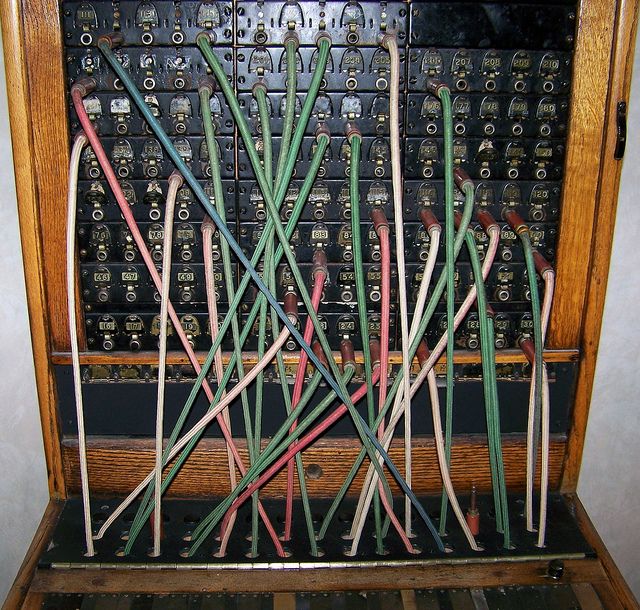
More specifically, it was young women seated behind a wall of cords and ringing signals, greeting callers with a steady “Number, please?” and manually linking one line to another.
These were Falmouth’s switchboard girls, an almost forgotten group who helped connect not just conversations but communities.
As early as 1901, Falmouth had a functioning telephone exchange. According to a newspaper clipping archived by NKYViews, the Falmouth and Williamstown Telephone Company completed a line between Falmouth and Boyd, bringing regional communication to Pendleton County for the first time:
“The Falmouth and Williamstown Telephone Company completed a line from Falmouth to Boyd.”
Falmouth Outlook, Sept. 3, 1901 via NKYViews – Pendleton Street Scenes
Even more direct is this statement from a Northern Kentucky history document:
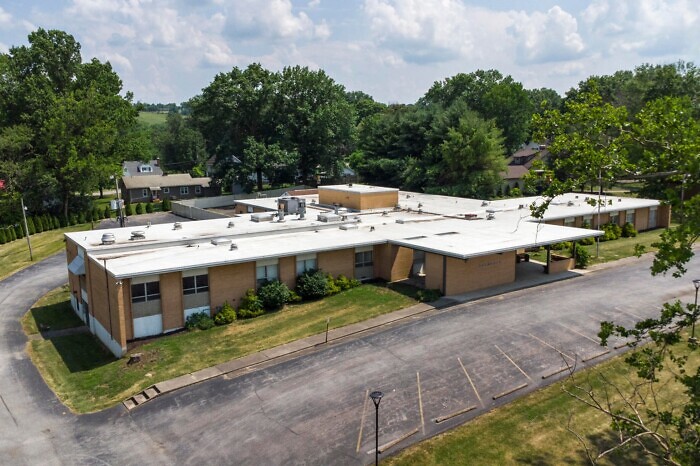
“A line magneto board was installed in the exchange building at Falmouth.”
Early Telephone in Northern Kentucky (NKYViews PDF Archive)
That magneto board required manual operation. It was not automated and every call had to be physically connected by hand, a job done overwhelmingly by local women hired as operators.
Though records from Falmouth’s specific operators are scarce, oral histories and regional documents across Kentucky affirm that young women were employed at rural exchanges, often working long hours alone or in small shifts.
A comprehensive record compiled by Morehead State University explains:
“The exchange was often operated by a young woman who not only connected calls but served as the communications hub for the area.”
Rennick Manuscript Collection, Morehead State Oral Histories
In small towns, switchboard girls often worked from modified rooms in stores or private homes, expected to know not just numbers but voices, families, and patterns of daily life.
These women were expected to be courteous, quick, and calm, sometimes alerting doctors, fire crews, or police before a proper emergency call could be routed.
That 1901 connection between Falmouth and Boyd was more than just copper wire. It was part of a growing regional network that relied entirely on manual labor to route calls between towns.
Each call across exchanges required multiple operators to coordinate in sequence. There were no direct dials.
Every long distance connection was a relay chain of operators. Each physically plugged and unplugged lines, flipped switches, and announced connections along the way.
The History of Telephone Switchboards – AT&T Archives
That means the women working in the Falmouth exchange building played a key role not just in local communication but in regional calls extending all the way to Williamstown, Cynthiana, and further.
By the 1940s and 1950s, electromechanical switching began replacing the need for manual operators. Falmouth’s exchange, like thousands of others, was eventually automated and the switchboard girls faded quietly from public memory.
But their role was foundational.
They connected emergency calls. They linked towns. They bridged farms, businesses, families, and friends, one call at a time.
Even today, historians continue to rediscover how important these women were to Kentucky’s infrastructure:
“Telephone operators were trusted figures in the community. They were often the first to respond in an emergency and the last to leave during disasters.”
History of Telephony in Rural America, National Museum of American History (Smithsonian)
If your mother, grandmother, or family friend worked as a telephone operator in Falmouth or anywhere in Pendleton County, we’d love to hear their story. Drop a comment below or send us a message.
Whisper One Out

Trending Now