“The Crop That Built the County”
For over 150 years, tobacco was the economic and cultural cornerstone of Pendleton County. From the early frontier days through New Deal farm policies and the 2004 federal buyout, tobacco defined life for farmers in and around Falmouth.
Early Tobacco in Pendleton County (1790s to 1850s)
Kentucky settlers began cultivating tobacco in small plots by the late 1700s, including in the fertile Licking River valley. As early as 1810, Pendleton County farmers were growing tobacco for local and regional markets.
The 1850 U.S. Agricultural Census listed Pendleton as producing 158000 pounds of tobacco, a significant figure for the time.
A Pendleton County entry in Collins’ Historical Sketches of Kentucky (1847) notes that tobacco was a “staple crop” alongside corn and livestock.
Source: Richard H. Collins, Historical Sketches of Kentucky, 1847, Vol. II.
Railroad Era and Market Access (1856 to 1920s)
The arrival of the Kentucky Central Railroad in 1856 transformed Falmouth into a tobacco trading hub. Now connected to Lexington and Covington, farmers could ship leaf tobacco efficiently to warehouses and buyers.
In 1876, Pendleton County produced over 1 million pounds of tobacco, as reported in The Annual Report of the Commissioner of Agriculture for Kentucky.
Tobacco warehouses and buyers appeared in Falmouth, as noted in The Falmouth Outlook throughout the early 1900s.
Sources:
-
Kentucky Commissioner of Agriculture, Annual Report (1876)
-
The Falmouth Outlook, 1904 to 1920 editions via Kentucky Digital Newspaper Program
Tobacco Wars and the Planters’ Revolt (1900 to 1915)
As major buyers like the American Tobacco Company set artificially low prices, farmers rebelled. Pendleton County joined the Planters’ Protective Association, attempting to force fairer prices through crop withholding.
In 1907, The Courier-Journal reported that Pendleton growers had “joined the withholding movement” and were boycotting Falmouth’s open-market sales.
Violence in neighboring counties, such as barn burnings by Night Riders, was reported in Falmouth but less common locally.
Sources:
-
Courier-Journal (Louisville), March 1907 edition
-
MacCorkle, William A., The Tobacco Night Riders of Kentucky and Tennessee (1910)
Peak Tobacco Culture (1920s to 1970s)
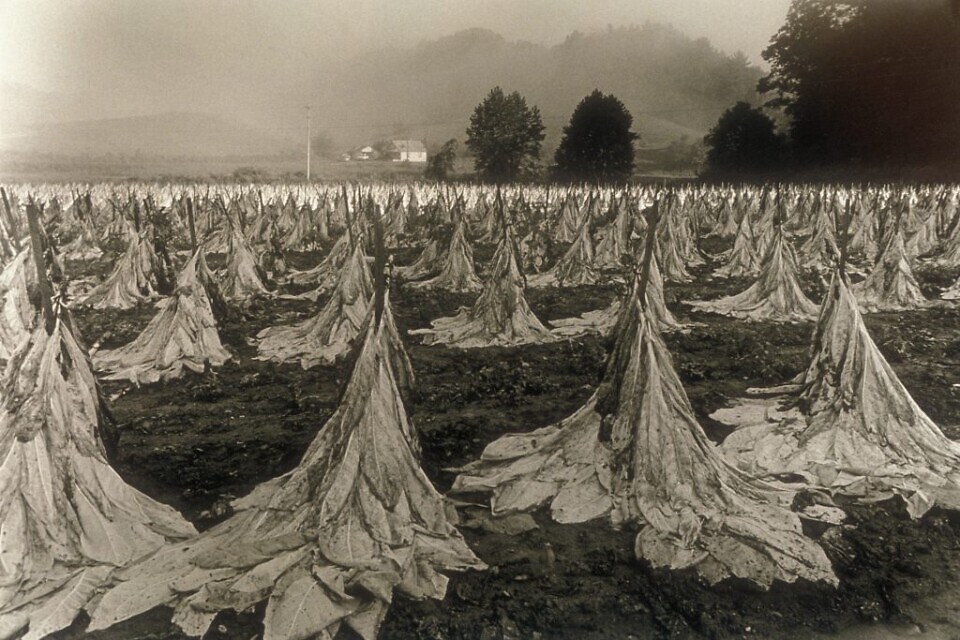
Burley tobacco, air cured in tall black barns, became the regional standard.
Many Falmouth families raised 2 to 6 acres annually, often involving children and grandparents in every step.
Local 4H and FFA clubs focused on grading tobacco leaves and construction of stripping barns.
Tobacco stripping, removing cured leaves from stalks, was a winter ritual involving community gathering, storytelling, and sometimes moonshine.
Sources:
-
Oral histories from Kentucky Tobacco Workers Project, University of Kentucky
-
USDA Farm Reports, 1955 to 1970
Collapse of the Industry and Aftermath
In 2004, the U.S. passed the Tobacco Transition Payment Program, also known as the Buyout.
It paid farmers to exit tobacco production permanently, ending the federal quota system that had existed since the New Deal.
Hundreds of Pendleton farmers took the deal, and tobacco production collapsed within five years.
Source: USDA Economic Research Service — ers.usda.gov
Ghosts of the Golden Leaf
Though no longer the dominant crop, the landscape still remembers.
Dozens of black tobacco barns, many now empty, dot the fields near Goforth, Morgan, Peach Grove, and Flower’s Bottom.
Families still tell stories of tobacco school breaks, or their first stripping barn memories.
Local auction scales, now gone, were once the heartbeat of the winter economy.
We’re gathering local voices, family barn photos, and stories from Pendleton’s tobacco past.
Were you part of the last generation to strip burley in Falmouth?
Have old auction slips, barn photos, or first barn paycheck stories?
Send them to The Whisper and help preserve the story before the ghosts of the golden leaf vanish entirely.
Whisper One Out

Trending Now