
What Is A Judge Executive? What Is A Magistrate?
 Chris Collins - Whisper One
Posted On March 26, 2026
Chris Collins - Whisper One
Posted On March 26, 2026
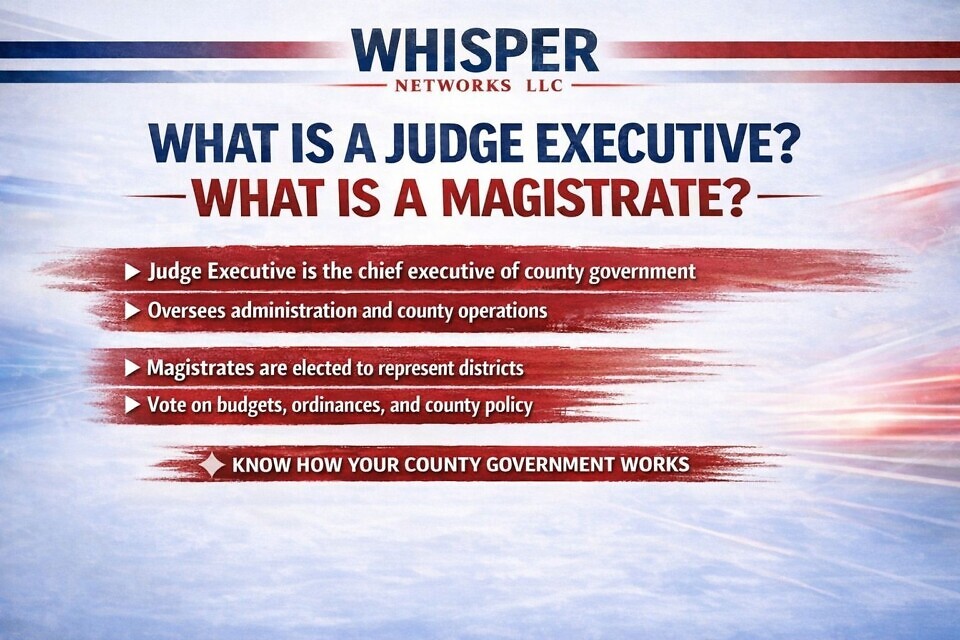
If you live anywhere in Pendleton County, the Judge/Executive, magistrates, and other county offices affect you. Who becomes Judge/Executive is extremely important, just as the magistrate representing your district is important. After many private questions, I felt it was time to answer them for everyone.
A lot of people hear “Judge/Executive” and assume it means some kind of courtroom judge running the county. That is not what the job is. In Kentucky, the County Judge/Executive is the chief executive officer of county government — basically like the mayor of the county. The office is primarily administrative and executive in nature, not a robe-and-gavel courtroom position. The Judge/Executive is responsible for carrying out the county’s executive functions, overseeing administration, and serving as the presiding officer of the fiscal court. Under Kentucky law, the Judge/Executive also has a vote on matters that come before the fiscal court.
In practical terms, that means the Judge/Executive helps lead the machinery of county government. The office is tied directly to budget preparation, financial administration, supervision of county functions, recordkeeping responsibilities, and the general duty to make sure county business is properly carried out. The Judge/Executive also sets the dates for regular fiscal court meetings and can call special meetings when needed.
Just as important, the Judge/Executive is not supposed to function like a one-person county king. In Kentucky, county government is structured so that major county decisions are made through the fiscal court, which is the county’s governing body. The Judge/Executive presides, but the magistrates are part of that governing structure and vote on county business as members of the fiscal court.
So what do magistrates do? Magistrates are elected officials who represent districts within the county and serve as members of the fiscal court. Their job is legislative and governing in nature at the county level. They vote on county ordinances, resolutions, budgets, claims, policies, and other fiscal court actions. In plain English, magistrates are supposed to represent the people in their districts while helping decide how county government operates, how money is spent, and what direction the county takes.
That matters because too many voters treat these offices like honorary titles or popularity contests. They are not. The Judge/Executive helps run county government day to day, and magistrates help steer and approve county policy through the fiscal court. If those people are asleep, compromised, uncurious, afraid to ask questions, or too comfortable with the usual way of doing things, the entire county feels it.
Whisper One Out
Trending Now