Wool, Mills & the Hills: How Falmouth Farmers Wove More
 Chris Collins - Whisper One
Posted On October 19, 2025
Chris Collins - Whisper One
Posted On October 19, 2025
0
There’s always more to the story than what makes the papers. Before any flood, before the big disasters, Falmouth was already hustling, not just with plows in the fields, but with sheep on the ridges and machinery clanking in town. Continuing with our farming article from last week there is another product that was raised on Falmouth Farms. Falmouth helped clothe a generation, kept that same generation warm and most people driving past where the old mill building was don’t even know it.
It all starts with Hills, Farms, and Fleece. You don’t have to look hard to realize our terrain is not flat Bluegrass. We’ve got limestone under us, hills around us, and tight valleys in between and back in the 1800s, farmers made the most of it.
Farms around Pendleton County were growing corn and wheat, sure but they were also raising cattle, hogs, and sheep. That last one? That’s where this story turns.
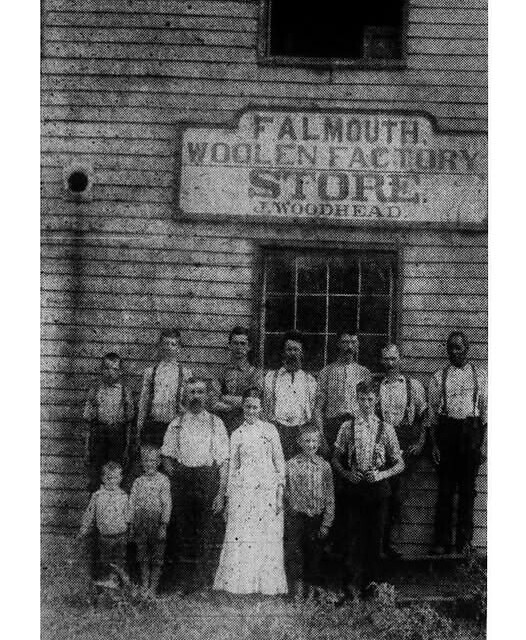
You see, in 1866, an Englishman named Joshua Woodhead showed up in Falmouth and set up shop. He brought textile machinery in from Massachusetts and built Pendleton Woolen Mills right on Water Street. And just like that, the bustling little river town became a textile town. Blankets, jeans, and heavy wool goods rolled out of that place and the fleece? That came from the surrounding hills and area of Falmouth.
(Source: nkyviews.com)
(Source: National Register of Historic Places, Falmouth Survey)
This wasn’t some side gig. Local farmers had a new reason to raise sheep, they had a market for the wool right here in town.
So you had:
– Hillside pastures full of sheep
– Shearers working seasonally across farms
– Wool carted in by wagon to Water Street
– A real functioning mill sending out product far beyond Pendleton County
And not just product, livelihood. The Woolen Mill gave work to local families, tied rural farms into town infrastructure, and pumped commerce back into Falmouth when other rural towns were fading.
(Source: nkyviews.com)
How this these wool products were transported is just as important. You don’t spin yarn and tuck it under your arm to market. Here’s how it moved:
In 1854, the railroad hit Falmouth, the Cincinnati, New Orleans and Texas Pacific Railway line came right through town.
The Woolen Mill? Sat just a short wagon ride from the tracks. Finished wool products were boxed up, hauled to the depot, and shipped out by train. North to Cincinnati, south to Lexington, even further to ports that pushed it along river or rail again.
Incoming too, the mill imported textile-grade machines and replacement parts from Massachusetts and elsewhere via train. This rail access made Falmouth matter in a way most small towns couldn’t replicate.
So yes, wool from Falmouth ridges got sheared, spun, milled, packed, and railed out to the world. And a town of a couple thousand people played a role in keeping others warm.
(Source: nkyviews.com)
Here’s what I love about this story: It’s not flashy. It’s not tragic. It’s not dressed up for tourists.
It’s real Falmouth.
This place worked. Falmouth had farmers tending hills, sheep feeding mills, workers manning looms, and freight cars hauling finished goods out of town. It’s the kind of thing you wouldn’t even notice unless someone told you. That’s the point.
So the next time you pass Water Street or see an old hillside pasture someone’s letting grow up remember: there was a time when this land buzzed with purpose. Not just survival, but production. A kind of quiet industry that pulled from the land and gave something back. The Pendleton Woolen Mills operated from 1866 to the early 1900’s.
Whisper One Out
Trending Now
Before Falmouth Was Falmouth, War Came Through Here
May 31, 2026

A Special Announcement From Whisper Networks LLC
May 30, 2026