Falmouth Considers Removing Historic Overlay
 Chris Collins - Whisper One
Posted On September 30, 2025
Chris Collins - Whisper One
Posted On September 30, 2025
0
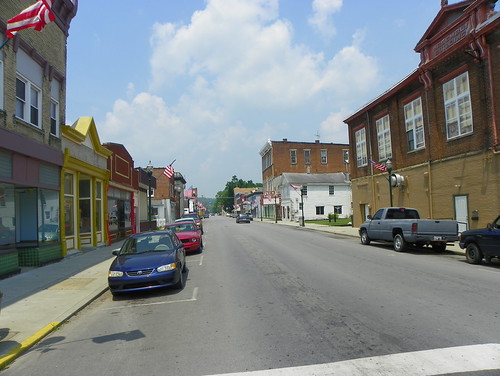
On Thursday October 2, 2025 Falmouth City Council has on its agenda the second reading to remove the historic overlay designation from parts of the zoning map. This is both a subtle and a huge change for a town to consider.
The area under Falmouth’s Historic Overlay isn’t sprawling. It runs along the west side of Main Street from the Courthouse and County Jail at 233 Main clear to the old Roller Rink block around 313 Main. It takes in both sides of Shelby Street from the Kennett Tavern corner at Main east and west to the Christian Church at 303 W. Shelby and the Bradford House at 302 E. Shelby. It also covers both sides of Chapel Street from Shelby south to the Church of the Nazarene at 202 and 204 Chapel and on to St. Francis Xavier at 202 W. 2nd.
This isn’t just a zoning line on a map. Inside those blocks the Historic Overlay adds a layer of rules meant to protect old buildings and the town’s historic character. That can mean extra permits, restrictions on demolition, and even design standards for repairs or new construction.
Now the city is talking about removing the overlay for part of this district and that is where the debate heats up.
Why Cities Do This
Cities typically strip away historic overlays for a few reasons:
Economic development – Restrictions can scare off developers and make new investment harder. Dropping them can bring new businesses, homes, and tax revenue.
Property rights – Some owners argue they should not face higher costs or tighter rules just because their property falls inside an arbitrary line on a map.
Blight and safety – In some cases historic rules block demolition or affordable repairs on crumbling unsafe buildings. Removing the overlay can clear the way for cleanup and redevelopment.
The Upside for Blighted Properties
For owners of long-abandoned or half-collapsed buildings removing the overlay can be a game changer. It can:
Cut through red tape for demolition or rebuilding.
Lower costs by allowing modern materials instead of “historic” ones.
Make properties more attractive to outside investors who do not want design restrictions.
In towns where overlays stay in place blighted lots can sit for decades because fixing them “the historic way” simply costs too much.
The Risks
The flip side? Once protections are gone so is the historic character. The same rules that frustrate developers also preserve the look feel and story of the town. Without them you could see blank lots, modern strip mall buildings, or “affordable” but characterless housing replace the 19th century facades.
Critics worry that quick development can erase a city’s sense of place while boosters argue that vacant collapsing buildings already do that.
Those are not the only side effects when removing a historic overlay designation. There are benefits to people who have held property in blighted areas. It can reset public scrutiny, improve resale values of homes in blighted areas, improve the privacy of quiet transfers, increase flip potential and land banking, make tax credit maneuvering easier, and make any utility or infrastructure uses easier to accomplish.
It is up to you to decide if you feel like this is a beneficial change for the town. For some honoring the historic look may not be as important. In addition it may just be so they can seize and tear down blighted homes easier. There are many that have been in need for quite a long time. Whatever the motivation is I would encourage you to join in the discussion.
This town council meeting is at 7:00 PM on October 2nd. One thing is for sure, once this protection is removed and buildings are changed or removed the town landscape will change. Any historic protection once removed and buildings are torn down or changed would require reproduction to restore.
Whisper One Out
Trending Now
Before Falmouth Was Falmouth, War Came Through Here
May 31, 2026

A Special Announcement From Whisper Networks LLC
May 30, 2026