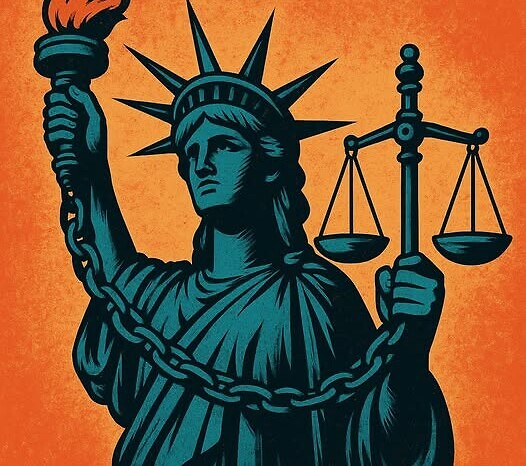
In August 1881, Falmouth found itself at the center of a racial flashpoint that nearly turned deadly.
A Black man named Dick Coleman was arrested and charged with the murder of 12-year-old Mary Ball, a white girl whose body was found near DeMossville. Coleman was brought to the Pendleton County Jail in Falmouth, where tensions rose immediately and violently.
Soon after his arrest, a white mob formed with the intent to lynch him before trial. This was not an idle threat, lynchings were common across Kentucky during this era, often carried out without resistance from authorities.
But this time, lawmen in Falmouth refused to surrender him. According to reports from the Louisville Courier-Journal, the sheriff barricaded the jail and armed himself and deputies, declaring that Coleman would face a trial, not a rope.
When the mob attempted to storm the jail, a riot broke out. Shots were fired. Chaos spilled through the streets of downtown Falmouth. The standoff grew so severe that Governor Luke P. Blackburn dispatched state militia troops to Falmouth to restore order and protect the prisoner.
Coleman was eventually moved under guard to Covington for safety, then returned later to stand trial in Pendleton County Circuit Court.
Trial and Execution
Coleman was found guilty of murder in early 1882. Despite public pressure for immediate execution, the process followed Kentucky law. He was executed by hanging in March 1882, a rare example of due process being upheld in an era dominated by racial mob justice.
Why It Matters Today
The 1881 Falmouth Riot stands as a documented moment in Kentucky history when a sheriff chose law over mob violence, risking his own safety to prevent a lynching.
It also reveals just how close Falmouth came to being yet another dot on the map of racial terror, a town where justice was defined by the mob.
Instead, Falmouth, for once, stood against it.
“The Falmouth Riot… was the only known case in Pendleton County where a lynch mob was turned away by law enforcement.”
George C. Wright, Racial Violence in Kentucky, 1865–1940 (University Press of Kentucky)
Citations & Sources
Louisville Courier-Journal, Aug 1881 – April 1882, riot and trial coverage
Wright, George C. Racial Violence in Kentucky, 1865–1940, Univ. Press of KY, 1990
Annual Report of the Kentucky Department of Justice, 1882
Kentucky Historical Society Archives
NAACP Lynching Statistics Database (KY)
Pendleton County Circuit Court execution records (Coleman, 1882)
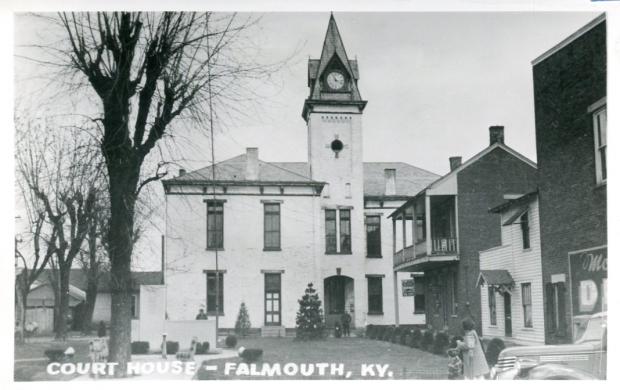
In the below picture this is actually the courthouse how it looked after its 1884 addition of the bell tower. I could not find a picture prior to this.
Whisper One Out

Trending Now
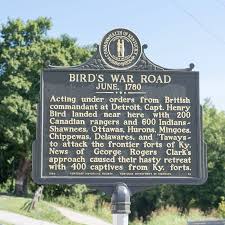
Before Falmouth Was Falmouth, War Came Through Here
May 31, 2026

A Special Announcement From Whisper Networks LLC
May 30, 2026