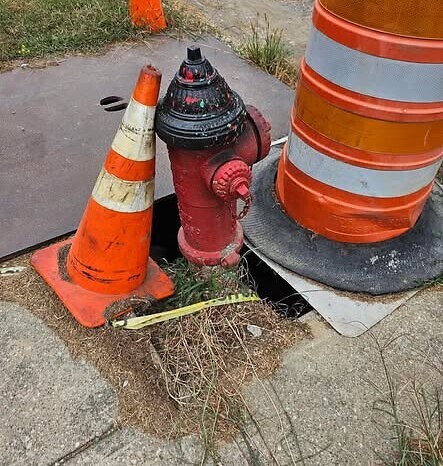
Between comments and an argument with the ever knowledgeable and allegedly pompous Mr. Wolfe, I felt like I need to post my reply as an article because it’s true and needs to be said. So here it is.
Ben, Southern has three “public” hydrants. Hydrant #1 is 15 PSI and 686 GPM. Hydrant #2 is inoperable. Hydrant #3 is 15 PSI and 550 GPM. Those numbers come straight out of the city’s 2024 hydrant report. That was done in November, and without legitimate testing and no maintenance since, that report is official and valid.
So no matter how much NFPA jargon you toss around, the system isn’t meeting the baseline. NFPA assumes hydrants within 1,000 ft are functional and code-compliant. Two hydrants sitting at 15 PSI static, with barely the required GPM, within 50 GPM over and 198 GPM over the required and one completely dead doesn’t fit that assumption. If you were to chain them and attach them to multiple engines in the case of a large school fire, they would not effectively fight the fire before cavitation.
Sprinklers can indeed be effective in some fires. They can save lives and property. They are supposed to stop the fire spread. Are you telling me they are properly tested and maintained all the time? They are acceptable to fail in 7% of cases. That doesn’t speak for these particular ones. How old are they? Are they serviced? Have they been tested? Are they up to standard? Nothing is published to say this. It’s not like we are talking about a factory or warehouse with adults or very few people. This is a fucking school for kids. Are you sure you’re 100% comfortable?
Ben, you’re hiding and playing wordplay with NFPA wording and validity, but here’s the reality: the Kentucky Division of Water requires 20 PSI minimum, the PSC regulates the water district that owns the hydrants, and ISO jacks up everyone’s insurance if hydrants don’t perform. So this isn’t just theory, it’s a regulatory and financial failure staring Falmouth in the face.
Now here are the facts we know for a fact from “public hydrants”:
Hydrant #1: 686 GPM @ 15 PSI
Hydrant #3: 550 GPM @ 15 PSI
Total combined GPM: ~1,236 GPM
Static pressure: 15 PSI (from official 2024 report) — static meaning 15 PSI throughout, no matter how much you chain.
Residual pressure: Not publicly tested.
Target fire flow (real fire): 1,000 GPM @ 20 PSI minimum residual, sustained for at least two hours. But we only have 15 PSI. So once again, multiple engines and lines could cause cavitation.
Real fires are a bit different than pushing a bucket.
Finally, we have your aforementioned two private hydrants:
One on the school, with no idea the size of the pipe, no publicly certified pressure rating or GPM.
One at the fairgrounds, again, no publicly certified pressure rating or GPM.
Dire? Well, if it’s my kids, I’m not going to rely on private hydrants I know little about. I’m not going to trust sprinklers in a town where little works the way it’s supposed to. And I’m going to look at the history of firefighting from these defunct-type hydrants: low pressure, barely above required GPM per hydrant.
Anyone who’s gonna go, “that should work”… it’s just ridiculous. You’re cheerleading an unproven possible fix for a public safety issue. I can’t decide if you’re just an ass or you actually believe your own bullshit.
Can you imagine the defense at that lawsuit? Well I know our required hydrants failed but there were two private ones that may help too. Seriously and I have said this before GTFOH with your stupid sanctimonious drivel.
Whisper One Out

Trending Now

Before Falmouth Was Falmouth, War Came Through Here
May 31, 2026

A Special Announcement From Whisper Networks LLC
May 30, 2026